
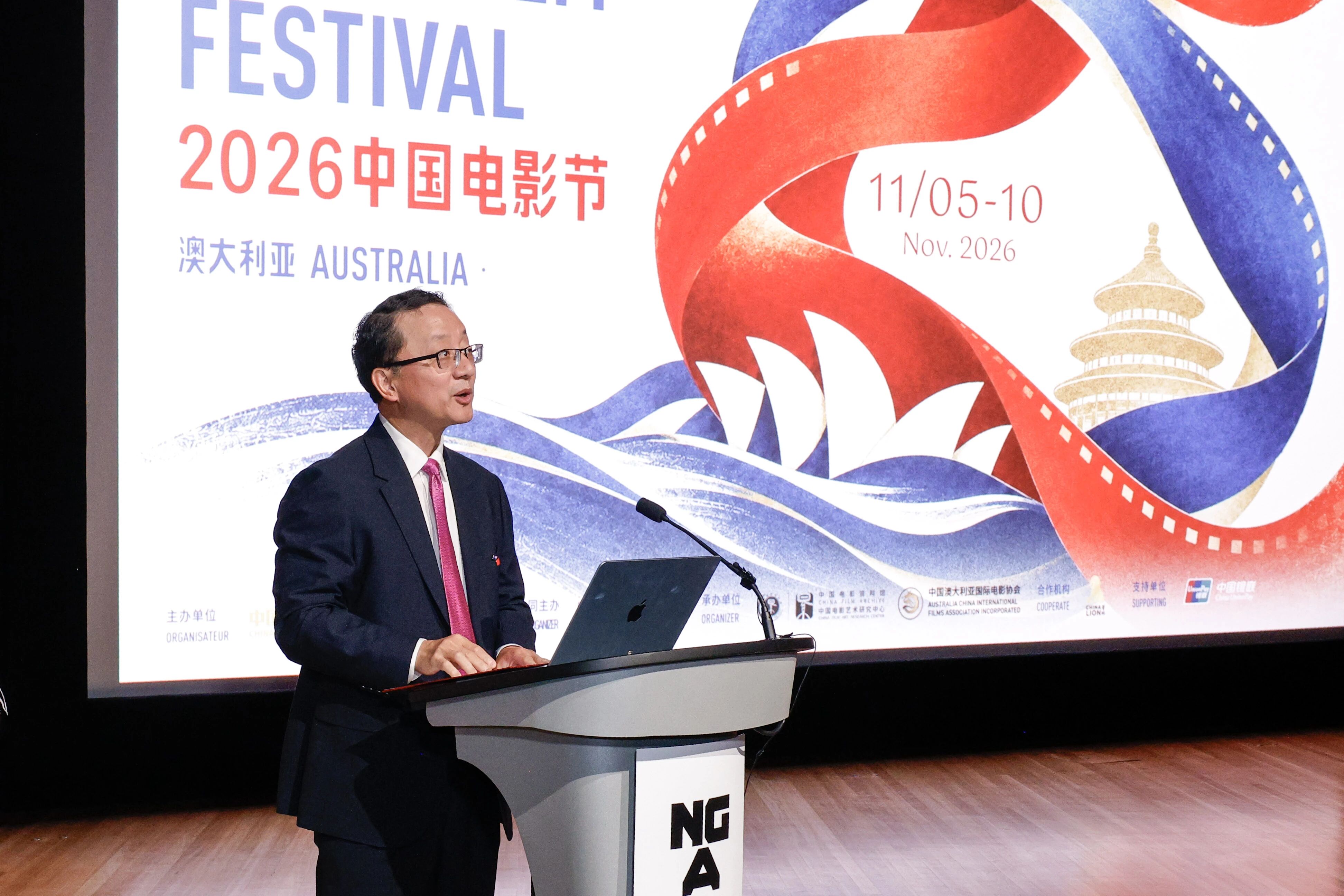
On November 5, 2026, H.E. Mr. Liu Jinsong, Chinese Ambassador to Australia, attended the National Opening Ceremony of the 2026 Chinese Film Festival at the National Gallery of Australia and delivered the following remarks:
Ladies and gentlemen,
Dear friends,
Good morning!
Today, we gather in Canberra to celebrate the opening of the 2026 Chinese Film Festival. On behalf of the Chinese Embassy in Australia, I warmly welcome the Chinese film delegation, our Australian friends, and everyone who loves cinema. I also wish to thank all those who have worked so hard to make this festival possible.
Speaking of Chinese cinema and Canberra, I am reminded of a story.
Many of you know Jackie Chan, the famous Chinese action film star. He has deep family ties with Canberra. He lived here when he was young, and his parents are now laid to rest in this city. For him, Canberra is more than Australia's capital. It is also a place filled with family memories, love and longing.
Film has the power to carry one person's story across the world, and to connect people who live thousands of miles apart.
Since arriving in Australia, I have watched the classic film Australia again, as well as Rabbit-Proof Fence. The first touches on the Japanese invaders’ heavy bombing of Darwin during World War II. The second tells a moving and painful story of Australia's indigenous people. Through these films, I have gained a deeper understanding of Australia's history and culture.
Chinese films are also finding their way into the hearts of Australian audiences.
Dying to Survive touched viewers with its story of ordinary people and their real emotions. It won the AACTA Award for Best Asian Film. Ne Zha 2 and Dead to Rights have also been well received in Australia.
From real-life stories to ancient myths, these films may come from a different language and culture, but audiences can still see something of themselves in the characters and share their feelings.
When President Xi Jinping spoke at the Australian Parliament in 2014, he called on China and Australia to strengthen cultural and people-to-people exchanges, and to become close friends who understand each other. He also said that, for the great tree of China-Australia relations to grow strong and green, it must have deep roots in people-to-people exchanges.
Last year, President Xi wrote a letter to veteran Chinese film artists. He encouraged filmmakers to draw inspiration from real life and create more outstanding works that reflect the spirit of our times and the hopes and feelings of the people.
The just-concluded Fifth Plenary Session of the 20th Central Committee of the Communist Party of China reaffirmed the importance of balanced progress in five key areas, including cultural development, making culture an integral part in Chinese modernization.
I always believe that good films should put people first. They should tell people's stories and give voice to their hopes and feelings. A great film often carries a sense of history and responsibility.
We should respect history, respect people, and respect different cultures. Through honest story-telling, we can build understanding. Through kindness, we can bring people closer together.
Films can show differences and conflicts. But they should never replace facts with prejudice, or create misunderstanding and division.
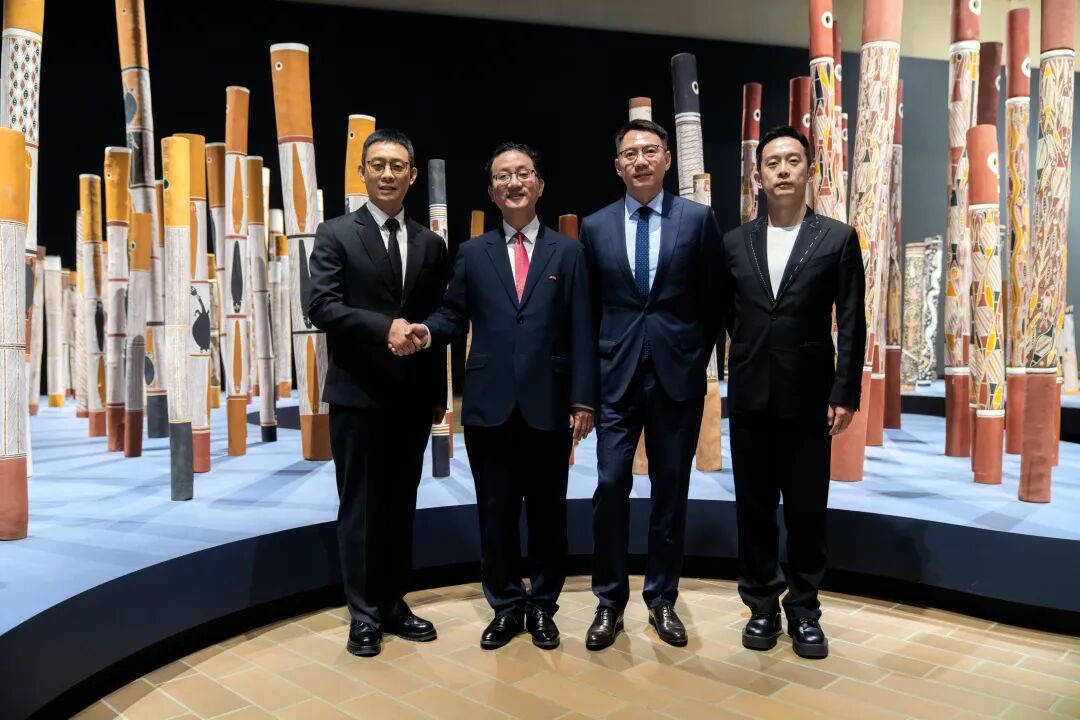
Today's opening film, Traces of Justice, is produced by Mr Qian Chongyuan and stars Mr Zhang Yi, both of whom are here with us today.
Inspired by the true story of Cui Daozhi, a well-known Chinese forensic expert, the film follows a police investigator who spends decades searching for the truth and standing up for justice.
Pegasus 3 tells an exciting and humorous story of motor racing, showing the courage to follow one's dreams and never give up.
Blades of the Guardians, set in the vast desert of my hometown Xinjiang Uyghur Autonomous Region, brings together the spirit of honour and justice in Chinese martial arts and the action of modern cinema.
The animated film All Wishes Come True! brings ancient Chinese legends of the Eight Immortals to life, showing what can happen when traditional culture meets modern creativity.
I would also like to mention two other films.
Once Upon a Time in the Middle East tells the story of Chinese people running a restaurant far from home, trying to protect everyday life and keep hope alive in the midst of war.
A Love Letter to Grandma tells a moving story through letters sent across oceans, showing the deep family ties between Chinese people living overseas and their homeland.
The characters in these films may seem ordinary Chinese, but their stories remind us of the value of family, the strength of the human spirit.
These six films are very different in content and style. But they all have a strong Chinese character and a global outlook.
I hope through these films, our Australian friends will see China in all its richness, diversity, and authenticity, and feel the Chinese people’s love for life and their pursuit of a better future.
China and Australia have a strong foundation for film cooperation, with much more we can achieve together.
In 2007, our two countries signed a government agreement on film co-production. Since then, we have worked together on films such as The Dragon Pearl and The Whistleblower.
This June, the Shanghai International Film Festival presented a special Australian film program, alongside exchanges between film professionals from both countries.
Today, Chinese filmmakers have once again come to Canberra.
These visits and exchanges, in both directions, are exactly what China-Australia cultural relations need, and what we should continue to encourage and support.
Later this month, the APEC Economic Leaders' Meeting will take place in Shenzhen. Prime Minister Anthony Albanese will lead an Australian delegation to the meeting and visit China.
Next year, we will celebrate the 55th anniversary of diplomatic relations between China and Australia. Both countries also have important political and diplomatic events ahead.
As China-Australia relations advance steadily, and as people from both countries work together to build a more mature, stable and fruitful China-Australia comprehensive strategic partnership, this Chinese Film Festival could not have come at a better time.
Let us use film to deepen understanding, and stories to bring people closer together.
May the friendship between the Chinese and Australian peoples grow even stronger as we learn from each other, appreciate each other's cultures, and create new stories together.
I wish the 2026 Chinese Film Festival every success!
Thank you very much!
* * * * * * * * *
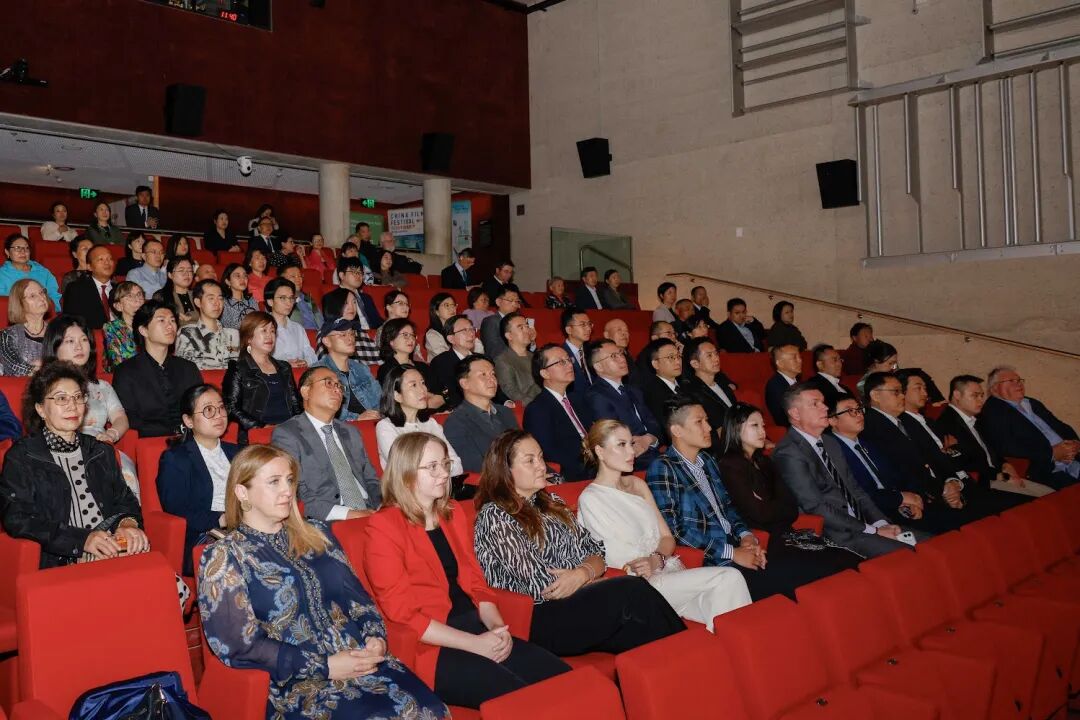
The 2026 China Film Festival is jointly organised by the China Film Administration and the Embassy of the People's Republic of China in Australia, with support from the China Film Archive, the Australia-China International Film Association and China Lion Film Australia.
The Festival features simultaneous screenings of six Chinese films across six Australian cities—Canberra, Sydney, Melbourne, Adelaide, Perth and Brisbane. The films are The Detective's Traces, Pegasus 3, Blades of the Guardians: Wind Rises in the Desert , Welcome to the Dragon Restaurant, Eight Immortals! and A Love Letter to Grandma.
At the premiere in Canberra, Deputy Director of China Film Administration Wei Nan, chief producer Qian Chongyuan、leading actor Zhang Yi, and other members of the creative team engaged with the audience in a discussion and Q&A session.